The question behind the work
“Become AI-first” is now standard advice for marketing teams, and it is almost always delivered without a definition. The marketers we talk to aren’t resisting it. They are trying to work out what it actually asks of them: where the time should go now, which of the dozen tools on offer is worth learning properly, and whether years of hard-won instinct still count for anything.
Those questions don’t have abstract answers, so this isn’t a definition. It’s a record of what AI-first turned out to mean for one B2B marketing team — and which parts of the job proved durable.
If you advise marketing teams rather than work inside one, the same shift is reshaping your offer — see what it does to marketing consultants.
B2B marketing teams live with a constant tension. They are asked to ship more campaigns, faster, to more segments. But the place those campaigns get built — the marketing automation platform — is unforgiving. It holds the brand’s voice, the audience’s permissions, the deliverability reputation, and the rules that keep regulated industries compliant. The pressure to move quickly is real, and so is the cost of getting it wrong in a live system.
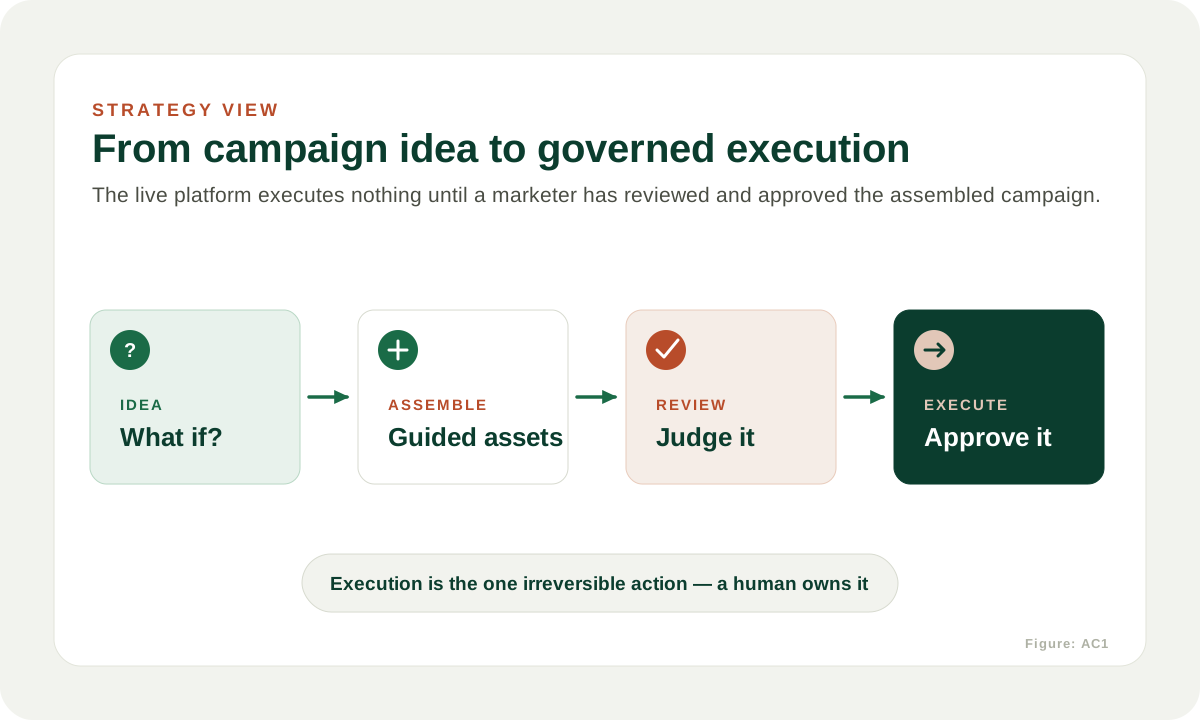
Good campaign ideas stall at exactly that point. A marketer thinks, “What if we ran a three-touch nurture for this segment?” or “What if this list got a tailored landing page?” and the idea turns into a ticket, a queue, a specialist’s backlog, or a half-built draft that never ships. The intent is clear. The route to a working campaign is not.
We built a different route. It lets a marketer take a campaign from idea to assembled, realistic assets inside their automation platform — guided, governed, and reviewable — with nothing executed until they choose to run it. What we took away was the friction between their judgement and the platform’s machinery.
The problem with building from a blank platform
Most marketing automation platforms ask a great deal of the person in front of them. To build even a modest campaign, a marketer has to hold the whole mechanism in their head: which list, which template, which redirect, which program, which fields, in which order. The interface assumes expertise that takes months to acquire, and it punishes small mistakes in ways that reach real recipients.
That is a hard place to do creative, strategic work. The platform can tell you what is technically possible. It cannot tell you whether the sequence makes sense for the audience, whether the message lands, or whether this is the campaign worth running this week.
So teams settle into one of two uncomfortable shapes. Either a handful of specialists become the bottleneck for everything, or less-experienced marketers build directly in the live platform and the organisation carries the risk. The usual response is more process and more sign-off. Ours was to pull two concerns apart:
- Make assembly fast and guided enough that any marketer can do it.
- Keep the live platform protected until a person has reviewed and approved the result.
Everything in the design follows from keeping those two apart.
The design principle: guided assembly, governed execution
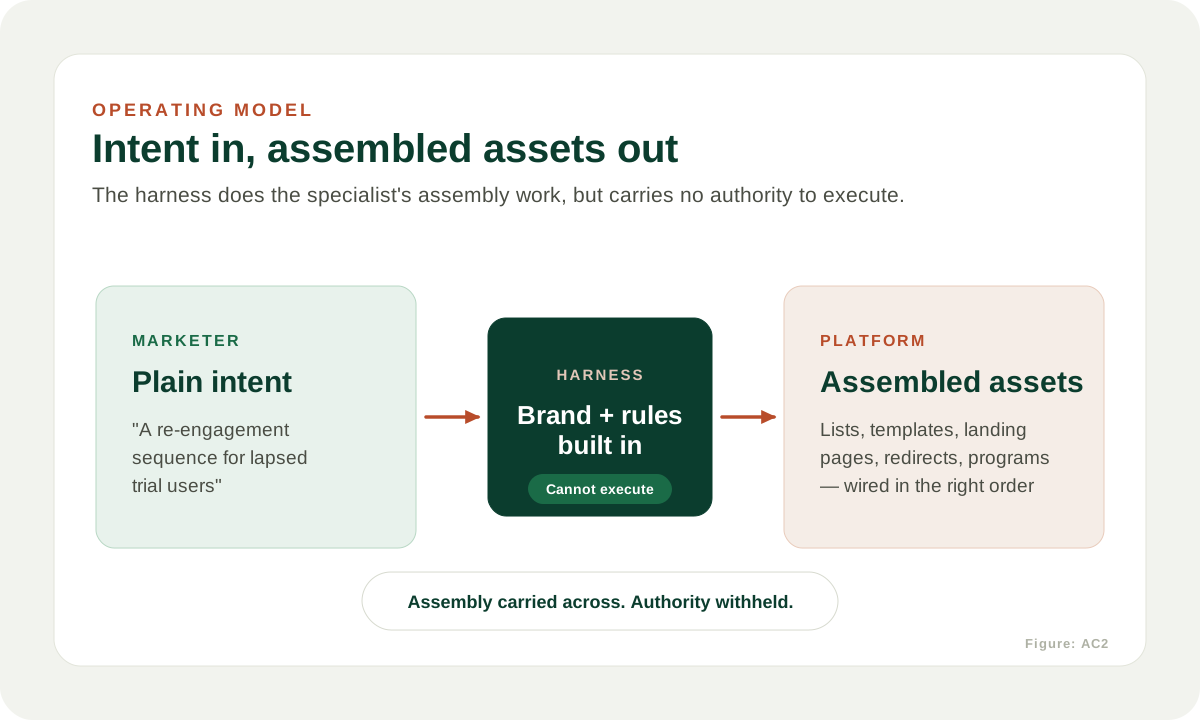
The harness sits between the marketer and the platform. The marketer describes the campaign in plain language; it translates that into the platform’s primitives — lists, templates, landing pages, redirects, programs — and assembles them in the right order, with the right relationships between them.
Where it stops is the whole point. A tool that only drafts copy leaves the hard, error-prone assembly untouched. A tool that executes on its own takes away the human judgement the live platform exists to protect. This one does the assembly a specialist would do, then stops at the boundary where a person should decide.
We held to four rules.
The harness assembles; the marketer commits. It can build a complete, ready-to-review campaign, but it never executes. Every outbound action crosses a deliberate point of human approval.
Brand and rules come built in. Templates, voice, segmentation conventions, and compliance constraints live inside the harness, so its default output is already on-brand and within the rules, rather than a draft someone has to correct afterwards.
The marketer works in their own language. Sign-off and iteration happen through intent — “make the second email warmer,” “narrow the list to existing customers” — rather than through the platform’s mechanics.
Everything stays legible and reversible until it executes. What the harness built, and why, stays visible and editable. Nothing becomes irreversible until a person chooses to make it so.
The loop: brief, design, build, run
The work moves through four stages and then starts again: brief, design, build, run.
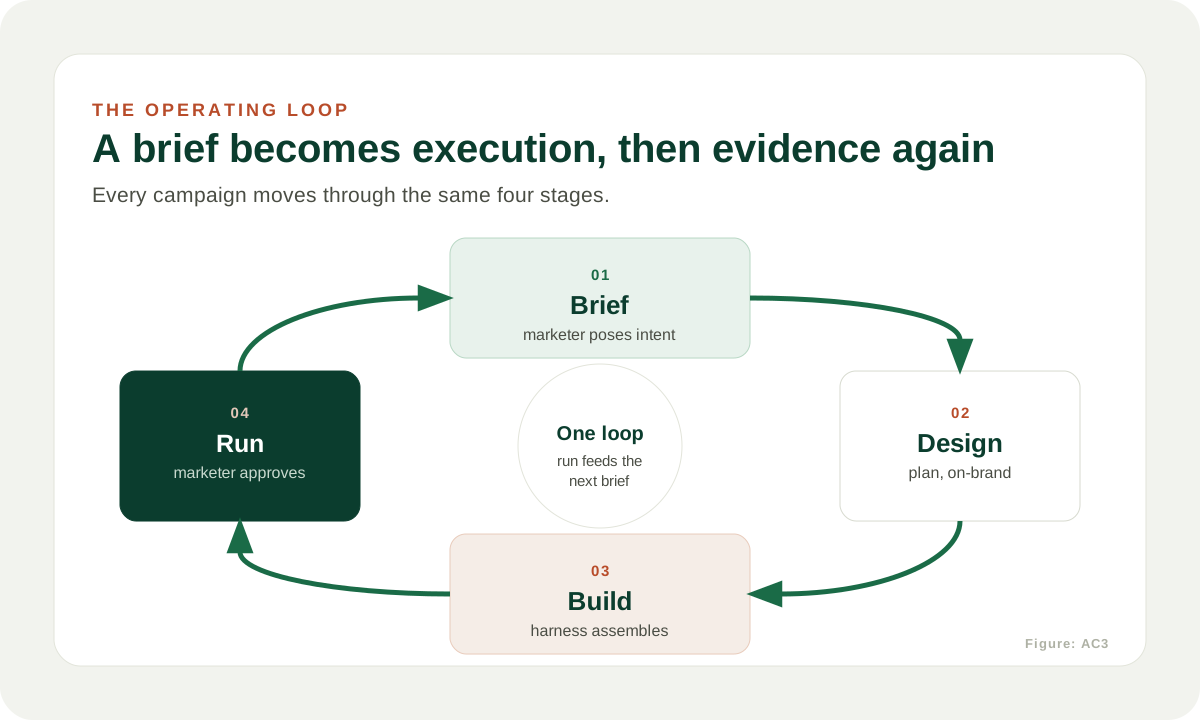
Brief. A marketer poses a campaign — an audience, a goal, a rough shape: “a re-engagement sequence for lapsed trial users.”
Design. The rough shape becomes a concrete plan: which template family, what the sequence looks like touch by touch, how the segment is defined, what tone carries the message.
Build. The harness assembles. It creates the list, drafts the emails against the brand template, builds the landing page and the tracked links, and wires them into a program — the steps a specialist would take, in the order they would take them.
Run. The marketer judges it before anything ships: reads the real emails, checks who is actually on the list, walks the flow the way a recipient would. Sometimes the verdict is “run it.” Sometimes it is “right idea, wrong audience.” Sometimes it is “not this week.” Once something does go live, what it does — opens, clicks, replies, unsubscribes — becomes the evidence the next brief is made from.
Each verdict is cheap, because it lands before the platform has executed anything.
The shape of work at each stage
The four stages don’t take the same kind of effort, and treating them as if they do is where these systems usually go wrong.
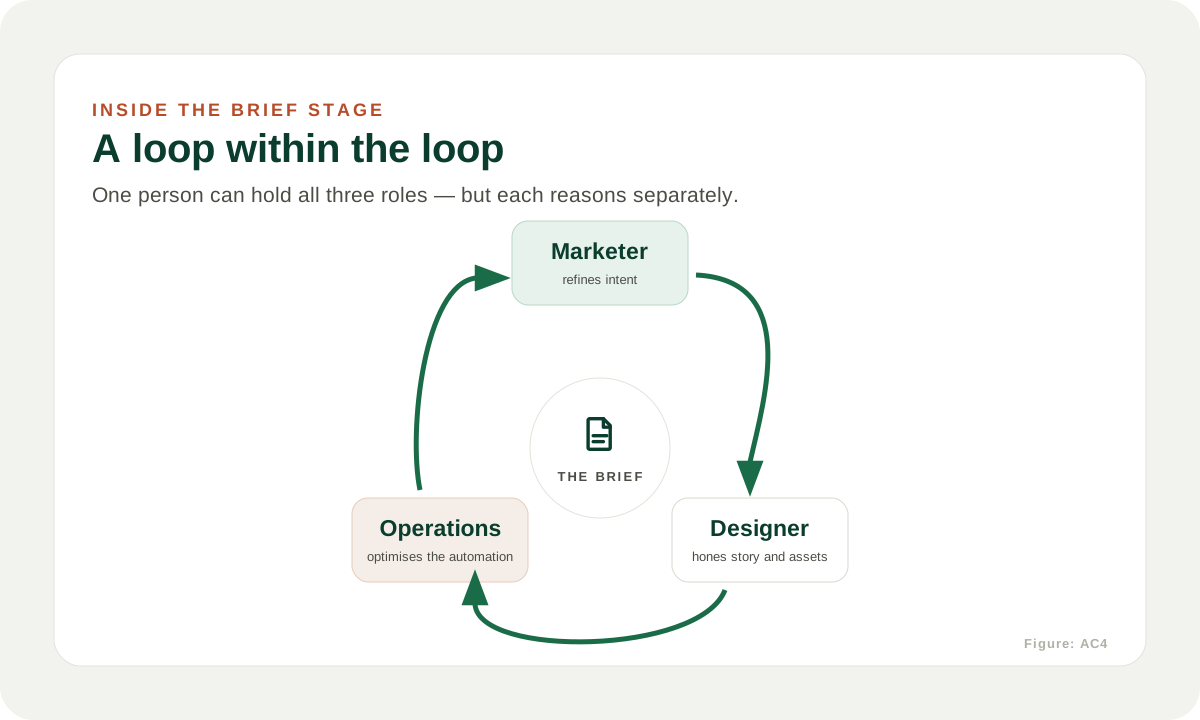
Brief is a loop within the loop. Each role keeps its own agent and its own iteration. The marketer refines intent. The designer hones the story and the assets. Operations optimises the automation, testing what the platform can actually do and where compliance or deliverability would push back. Three loops running in parallel, converging on one brief rather than three. When a campaign runs, all three review the results together.
These are roles, not headcount — a full-stack marketer often plays all three. They still have to be played separately, each with its own agent and its own line of reasoning. Collapsed into a single prompt, the brief just agrees with itself.
The same blurring is happening in software product teams, where the lines between engineer, product manager, designer, and product marketer are thinning. The roles survive as distinct kinds of reasoning long after they stop being distinct job titles.
Design is choosing from a known set of moves — which sequence pattern, which template, which segmentation logic — not inventing a new identity for every campaign. That constraint is what keeps it fast.
Build is deterministic. A correct design should assemble the same way every time, which makes it the stage most safely handed to the harness entirely.
Run is judgement, and the only stage with an irreversible action behind it. That’s why it keeps a person in the room.
The ground truth every stage has to share
“Brand and rules come built in” is a small sentence for a large piece of infrastructure.
A harness assembling campaigns at speed cannot re-derive “what’s on-brand” from a prompt each time and expect the answer to hold still. Design and build both need to draw from the same fixed, machine-readable source — not a style guide someone half-remembers, and not an interpretation baked into one prompt that quietly drifts from the one baked into another.
That source is a brand design system. Ours is published at brand.helikona.com, generated from the components and stylesheets we actually ship rather than hand-copied into a document that goes stale.
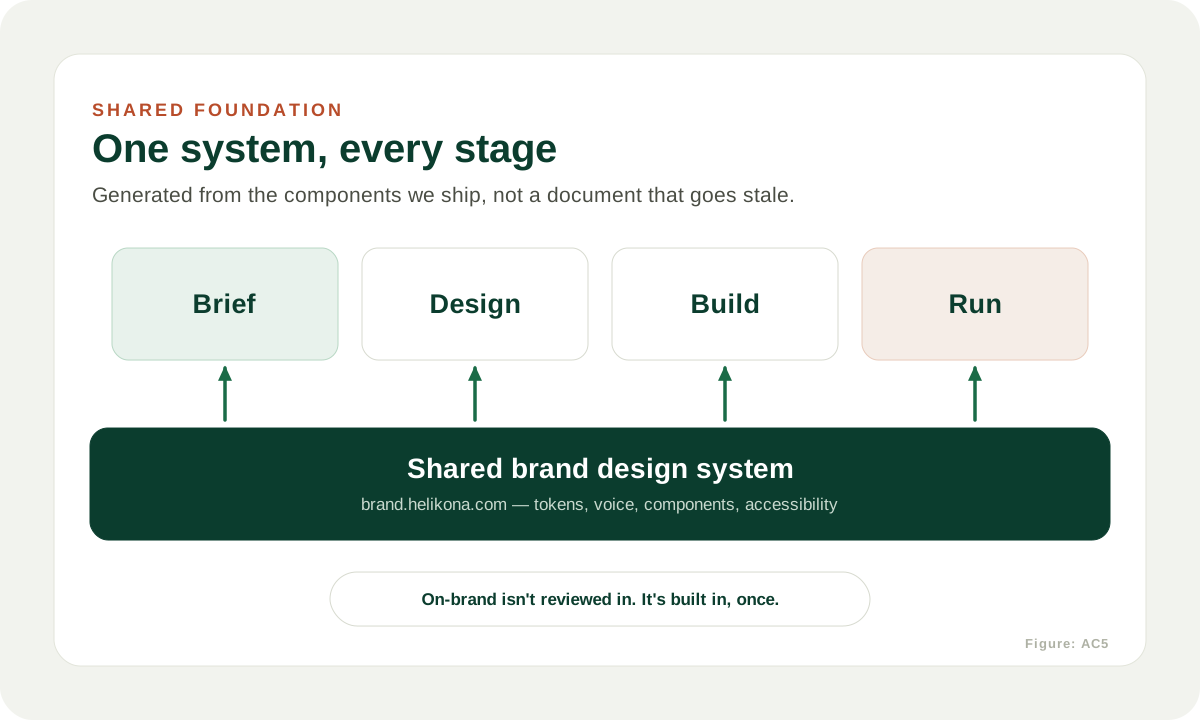
It’s easy work to skip and expensive to skip badly. Without it, “on-brand by default” is a promise the harness can’t keep: every campaign becomes a fresh negotiation with the brand instead of an application of it. With it, run’s approval stops being a hunt for brand and accessibility drift and goes back to being the judgement it should be — whether this campaign, for this audience, is worth running.
Why more generation wouldn’t have fixed it
AI has made it easy to produce campaign assets — copy, layouts, segments. But ask a marketer where the delay actually sat and they won’t say drafting; they’ll say they were waiting on operations. Generation was a real constraint, and AI has largely dissolved it. The queue behind it has not moved, because that queue was never mostly about producing assets. It was about assembling them correctly inside a platform that enforces brand, permission, and deliverability rules — without handing an autonomous system the keys.
Here, AI earned its place by carrying a marketer’s intent across to working platform assets — the translation that used to need a specialist. Generation alone would not have cleared the queue. What made it work was the model around it: brand and rules built in, every action legible, and one approval gate before anything executes.
AI does not remove the marketer’s judgement about whether a campaign should run; it makes that judgement count for more. When the cost of getting a campaign to the point of decision falls close to zero, the decision itself carries the weight. What stays with the marketer is intent, taste, and discretion — which was never the same thing as operating the platform.
What changed
The first change was practical. Campaign ideas became assembled assets in minutes rather than sprints, and more people could build one themselves — which freed the platform specialists for harder problems: new kinds of campaign, sharper audience strategies, better use of the platform, instead of assembling individual tactics on request.
The deeper change was about where expertise sat. The platform mechanics moved into the harness; strategy and judgement stayed with the marketer.
The most interesting change was the one we didn’t design for. With the mechanical work absorbed, people started imagining new methods and skills — things that raise what the team can do at all — instead of reworking the same patterns each cycle. Capability stopped being a fixed ceiling you optimised against and became something the team could add to.
That suits some people more than others. Plenty of good marketers value predictable, repeatable work, and they have felt this shift hardest. The answer for them hasn’t been to become a different kind of marketer. It’s that the new tools have their own repeatable processes — they just haven’t been written down yet, and finding them is real work worth naming as such.
What “AI-first” actually meant here
Strip the phrase back and, for this team, it resolved into three answers.
Where the time goes. Almost all of it moved to the two ends of the loop — brief and run. Build stopped being somewhere anyone spends time, and design shrank to choosing between known moves. That gives the term a usable test: if a marketer’s week still looks like assembly, the tools have been added but the work hasn’t changed.
Which tools are worth learning. Not the generators. Producing copy, layouts, and variants is close to table stakes now, and largely interchangeable between vendors. What earned its place were the tools that reach into the system where the work actually lands — the automation platform, the design system, the record of what ran and what happened. Anything that can only hand you a draft leaves the queue exactly where it was.
Which experience still counts. More than people fear, but not the parts they expect. Knowing how to operate the platform stopped being scarce almost overnight. Knowing which campaign is worth running, what a segment will tolerate, when a message is subtly off, why last year’s version underperformed — that got more valuable, because it is now the thing the loop waits on.
What this does to marketing consultants
The same shift lands differently outside the building, on the marketing consultants and agencies around the team. That isn’t our profession — we advise on the technology side — but we build alongside enough of them to watch this taking hold.
Clients who once briefed someone to build a website, write a press release, or fill a month of social posts are increasingly content to make those things themselves. The generalist whose value was “we’ll produce it for you” is watching that work thin. What replaces it is advisory capacity that is genuinely AI-aware — including the automation and AI configuration work that used to sit with somebody else entirely.
That work exists because self-service has a failure mode. Clients get stuck. Or they produce something they aren’t happy with and can’t say why. Or they can’t turn a good one-off into a process that repeats, no matter how sound their assistant’s advice was. Stepping in at those points is a different engagement from producing the artefact — it suits a retained arrangement better than a project one.
Expect consultants to align themselves to a single automation or AI stack rather than staying tool-agnostic. The learning curve is steep enough that spreading across five platforms means being useful on none, while depth in one compounds across every client you take.
The economics are the uncomfortable part. A consultant who can’t broaden what they deliver into more kinds of value has only one lever left: business development, acquiring a higher multiple of clients per consultant to hold revenue steady. That is a real change in the shape of the job, and we expect it to push a number of people out of the profession. The ones who stay will be those who can hold a wider set of tasks without giving up the leverage their fundamental skills provide — a copywriter who adds video production or agent building, and still brings the taste and judgement that made the copy good in the first place.
The strategy underneath
Underneath, this was never really a story about producing assets faster. It was about who can safely operate a high-consequence system.
Confidence in a system like this does not come from locking it down to a handful of experts. It comes from knowing exactly where the irreversible step is — execution — and putting a person, with full context, on it. The harness earns its keep by making everything up to that line quick and safe, and the line itself impossible to miss.
For anyone scaling AI-assisted marketing, the pattern is worth taking on. You do not have to choose between empowering more people and protecting the system. Build it so the unsafe kind of speed — ungoverned execution — simply is not available, and the safe kind puts a finished, reviewable campaign in a marketer’s hands fast enough to matter.
That is how “what if we ran this?” turns into a campaign someone can assemble, judge, and stand behind before it ever reaches a customer.
Implementation note: in the live version, Salesforce CRM and Marketing Cloud Account Engagement serve as the marketing automation platform. The learnings are considered transferable to similar platforms.
Related: A Straight-Through Process for AI-Native Consulting — on the interplay between a services provider and a client running an AI-native work operating system. Most marketing teams outsource marketing automation change in exactly this way.