The question behind the work
High-stakes operating environments create a familiar tension. The organisation needs to change, but the thing being changed holds real people, real commitments, and real consequences. Everyone can feel the opportunity. Everyone can also feel the risk.
That is where good ideas start to slow down. A leader asks, “What if clients could do this themselves?” or “What if this step disappeared?” and the answer becomes a document, a meeting, a cautious estimate, or a long queue. The idea is discussed before anyone has felt it. By the time it reaches a decision, much of the original intent has been flattened.
We designed a different path: a way for a proposed change to become a working, realistic version of itself before it touched the live organisation. The point was not speed for its own sake. It was to create evidence early enough that leaders could make a better decision.
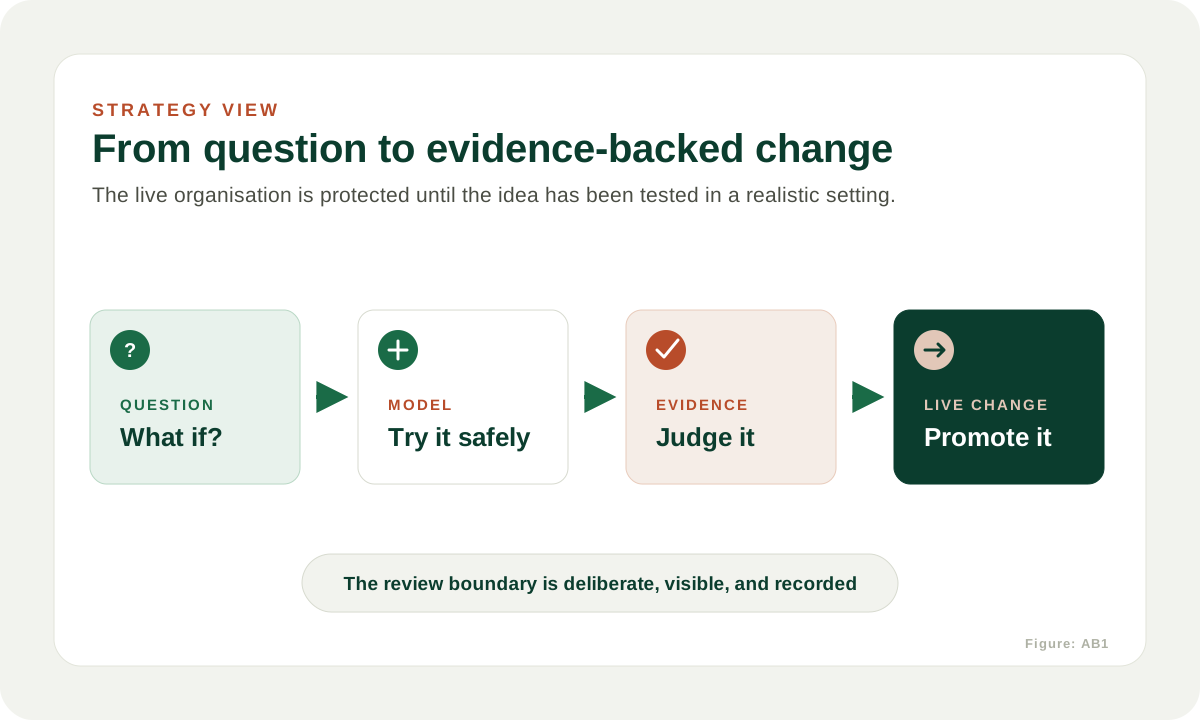
The problem with deciding from description
Most change processes ask business leaders to approve an abstraction. They read a description, look at a mockup, review a list of requirements, and try to imagine whether the change will work in practice.
That is a difficult way to make a sound decision. A description can tell you what the change is meant to do. It cannot show whether the sequence feels right, whether the edge cases matter, whether the language makes sense in context, or whether the person using it will trust it.
In this case, the work involved live-shaped software: the real kind of operating environment a business relies on, not a demo. The usual answer would have been to slow the work down and protect the live environment through caution. Our answer was to separate the two concerns:
- Make experimentation feel real enough to judge.
- Keep the live organisation protected until the evidence is strong enough.
That separation became the core design principle.
The design principle: real enough to learn, separate enough to be safe
The heart of the strategy was a temporary “what-if” environment. It is a working version of the proposed change, shaped like the real operating environment, but isolated from the live organisation.
That distinction matters. If the environment is too fake, the learning is weak. If it is too connected to live operations, the risk is too high. The useful middle ground is a space where leaders can use the proposed change with realistic context, while the organisation’s real data, commitments, and money stay protected.
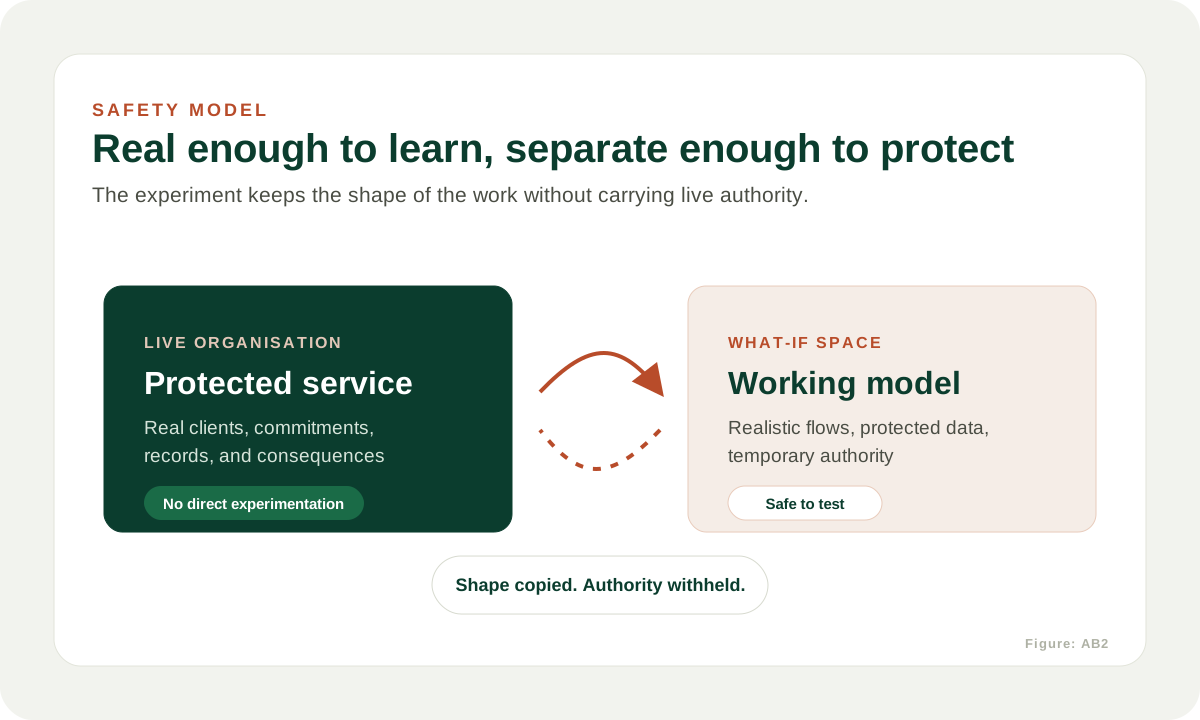
In practice, that meant four strategic rules:
The what-if space is temporary. It exists to answer a question, not to become a shadow version of the live environment. When the question has been answered, the space is removed.
The data is protected before people use it. The environment can feel realistic without exposing personal or commercially sensitive information.
The people judging the change can use it directly. Sign-off is based on experience, not interpretation. A business stakeholder can open the working version, move through it, and decide whether the idea holds up.
The route to live change is gated. A promising experiment does not drift into live use. It has to cross a deliberate review boundary, with the evidence visible before approval.
The what-if loop
The working rhythm is simple.
First, someone poses a hypothesis: a change they believe might make the experience clearer, faster, safer, or more useful. Instead of turning that hypothesis into a long specification, we turn it into a temporary working model.
Then the right people use it. They do not inspect it from a distance. They click through the actual flow, in a realistic setting, and ask the questions that only appear when something is in your hands: would a client understand this, does this step belong here, what happens when the decision is ambiguous, where would trust break?
The result is evidence. Sometimes the evidence says the change is worth promoting. Sometimes it says the idea was directionally right but needs another pass. Sometimes it says the safest thing is to discard it. All three answers are useful, because all three happen before the live organisation carries the cost.
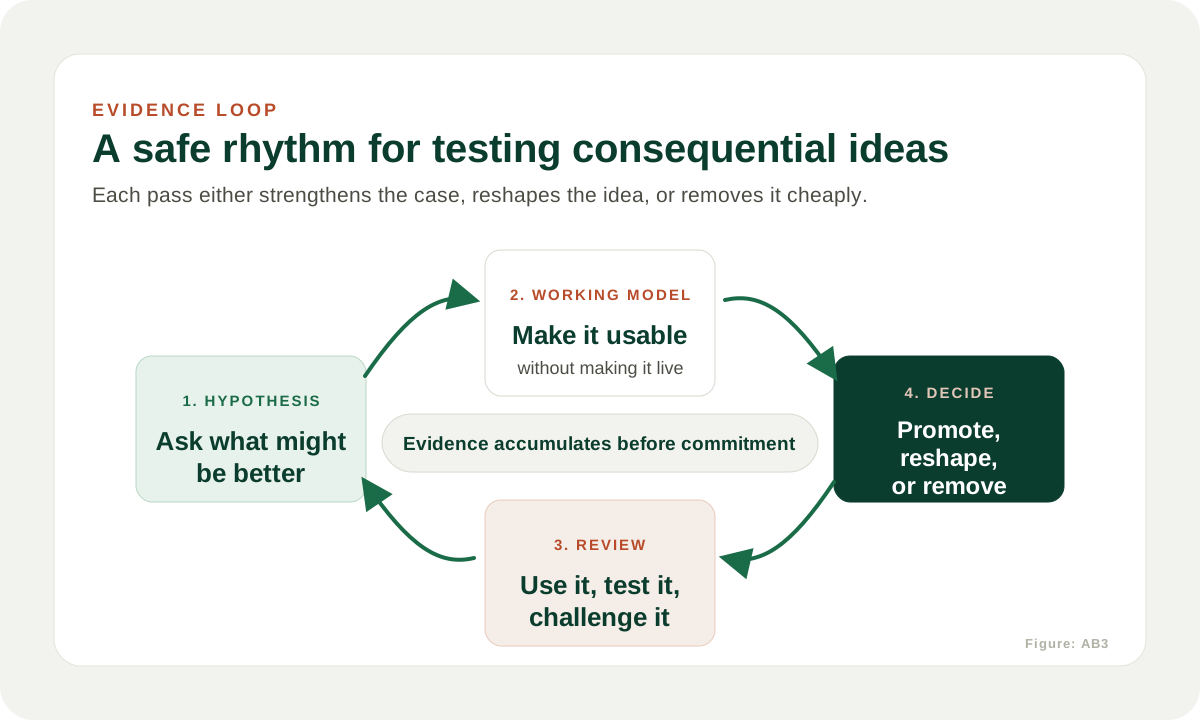
This is the difference between “we think this will work” and “we have used a realistic version and know what it changes.”
Why this matters for AI-assisted work
AI makes it easier to produce a working version of an idea. That is useful, but it also changes the risk profile. When the distance between a sentence and functioning software gets shorter, organisations need a clearer boundary between exploration and live operation.
The answer is not to slow everything back down. It is to design the boundary properly.
In this case, AI-assisted development was useful because it helped move quickly from hypothesis to working model. But the value was not the technology by itself. The value was the operating model around it: temporary spaces, protected data, direct business review, and a one-way promotion path into live use.
That is the broader lesson. AI does not remove the need for judgement. It makes judgement more important, because more things can be tried. The organisations that benefit will be the ones that know how to create evidence without widening the blast radius.
What changed
The immediate change was practical: leaders could test meaningful improvements before committing the live organisation to them.
The deeper change was cultural. The question shifted from “Can we risk changing this?” to “Can we create a safe way to learn whether this change deserves to exist?”
That shift matters. It gives ambitious ideas a place to breathe without asking the organisation to suspend its standards. It also gives cautious stakeholders a better object to react to than a document. They can see the change, use it, challenge it, and ask for proof.
The result is a healthier decision cycle:
- Ideas become working evidence sooner.
- Stakeholders validate by using, not just reviewing.
- Sensitive information stays protected.
- Live changes cross a clear approval boundary.
- Failed ideas are removed cheaply, before they become organisational debt.
The strategy underneath
This work was not really about a delivery mechanism. It was about organisational confidence.
Confidence does not come from moving slowly. It comes from knowing what kind of risk you are taking, where the boundary is, and what evidence you have before you cross it. A what-if environment is useful because it makes that boundary visible.
For leaders working through AI-enabled change, that is the pattern worth carrying forward: do not ask the organisation to choose between speed and safety. Build a path where the unsafe version of speed is impossible, and the safe version produces evidence quickly enough to matter.
That is how a “what if?” becomes something the organisation can pick up, test, and judge before it becomes real.